
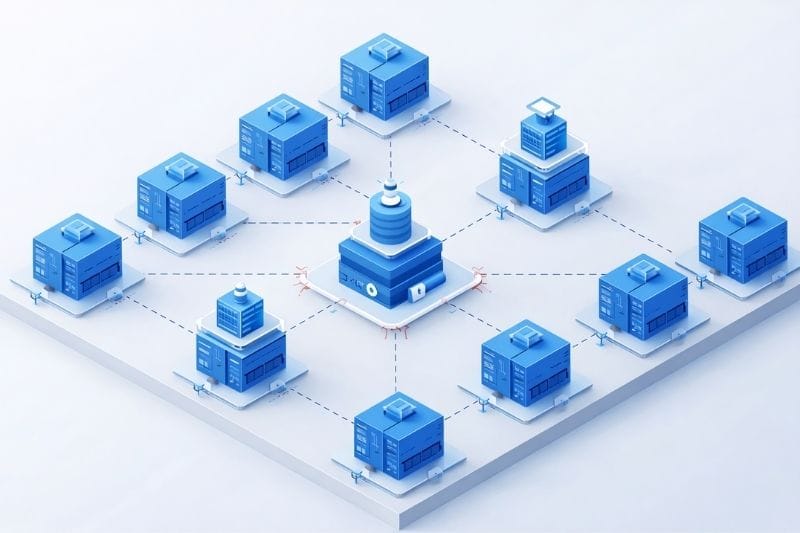
Microservices Architecture
Project Overview
This project focused on a rapidly growing digital platform operating in a high-transaction environment where reliability, responsiveness, and uptime directly impacted business outcomes. As user activity and data volumes increased, the legacy monolithic system became increasingly difficult to maintain and risky to update.
The existing platform required full deployments for small changes, failures propagated across the system, and peak load slowed performance. While initially developed for fintech use cases, the challenges addressed by this redesign are common to SaaS, e-commerce, and enterprise-grade applications handling sensitive data at scale.
Technology Stack
1. Core Backend & Architecture
Java, Spring Boot, Spring Cloud, Microservices Architecture
80%
2. APIs, Security & Communication
REST APIs, SOAP Services, API Gateway, JWT Authentication, Asynchronous Communication
90%
3. Data, Caching & Performance
MySQL, SQL Server, MongoDB, Redis, Distributed Caching, Load Balancing
80%
4. DevOps, Deployment & Quality
Docker, Kubernetes, CI/CD Pipelines, JUnit Testing
85%
The Challenge
When System Growth Began to Limit
Business Agility
Business Agility
As transaction volumes increased, the platform started showing clear signs of strain. Scheduled downtime was required for deployments, performance degraded under high load, and tightly coupled components meant failures in one service could affect the entire system. Maintenance became slower, riskier, and more expensive, limiting the company’s ability to innovate.
Our Solutions
The monolithic system was decomposed into independently deployable microservices.
Distributed processing, caching, and load balancing were introduced to stabilize performance.
Automated CI/CD pipelines were implemented to remove downtime from releases and reduce risk.
Service-level security ensured that failures or breaches in one area would not impact the entire platform.
Results and Impact
Stability, Scale, and Operational Confidence Restored
Deployments now run with zero downtime, even during peak traffic windows.
The system reliably supports 1,000,000+ daily transactions.
Response times improved consistently across web and mobile platforms.
Operational overhead reduced, optimizing infrastructure usage and costs.
Business Value
The platform now evolves without operational risk. Feature releases are faster and safer, system stability improved during demand spikes, and the architecture is positioned to support long-term growth, regulatory compliance, and market expansion.
Daily Transaction
0
+
Zero-Downtime
0
%
Risk Reduction
0
%
If your platform is approaching the limits of its current architecture, Visionixity can help implement a scalable microservices approach that restores stability, performance, and deployment confidence. Platforms in fintech, SaaS, e-commerce, or enterprise environments can scale safely while supporting continuous innovation.
Visionixity